 Chroma Cathay朱華Chroma Cathay朱華
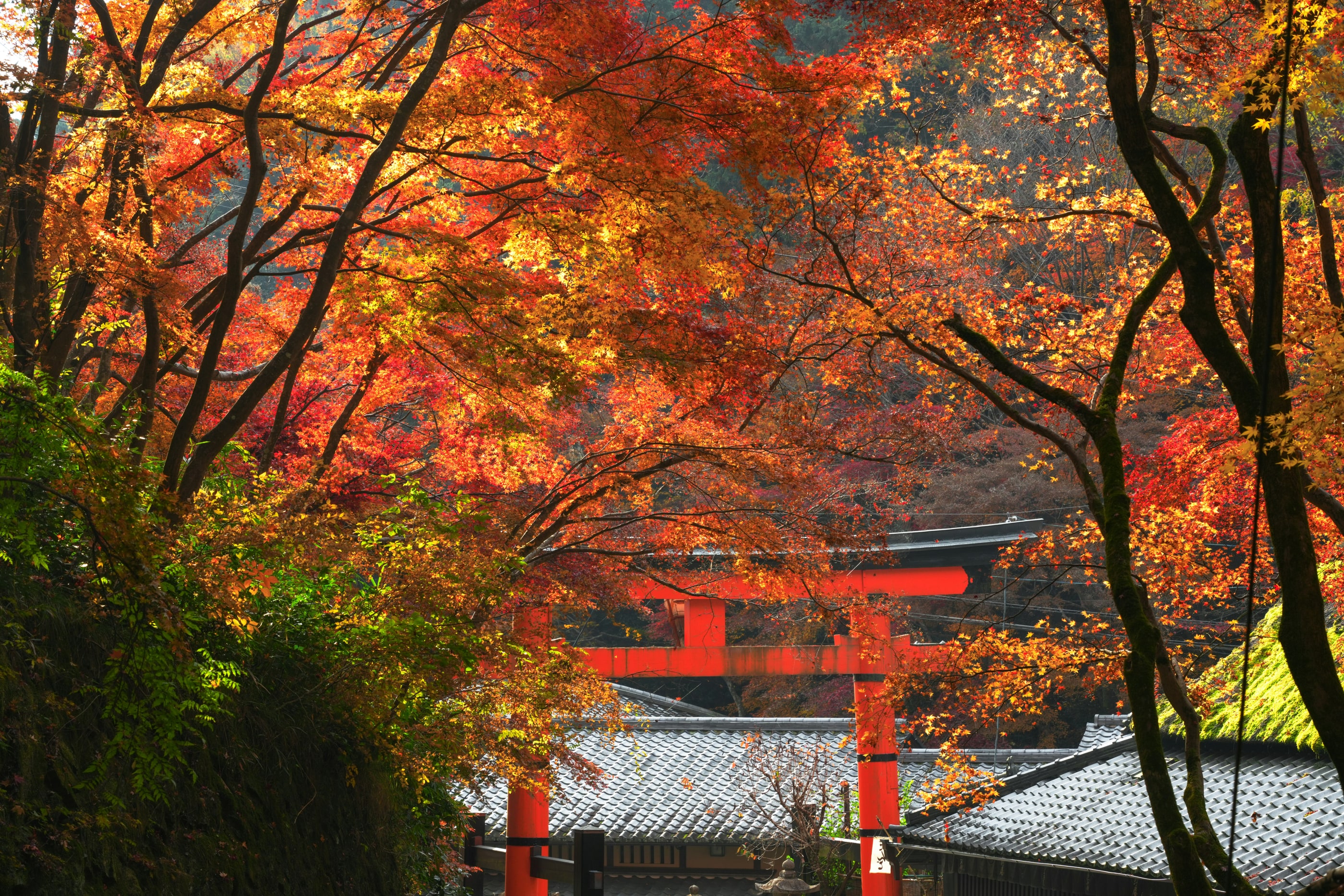
A vermilion torii stands inside an explosion of turning maple — red, persimmon, and gold against the last of the evergreen. Momiji season is the moment the Kyoto hillsides become a single graded palette, the kind the atlas records microseason by microseason.
THE JAPANESE COLOR ATLAS READS THE YEAR AS A PALETTE — SEVENTY-TWO MICROSEASONS DEEP.
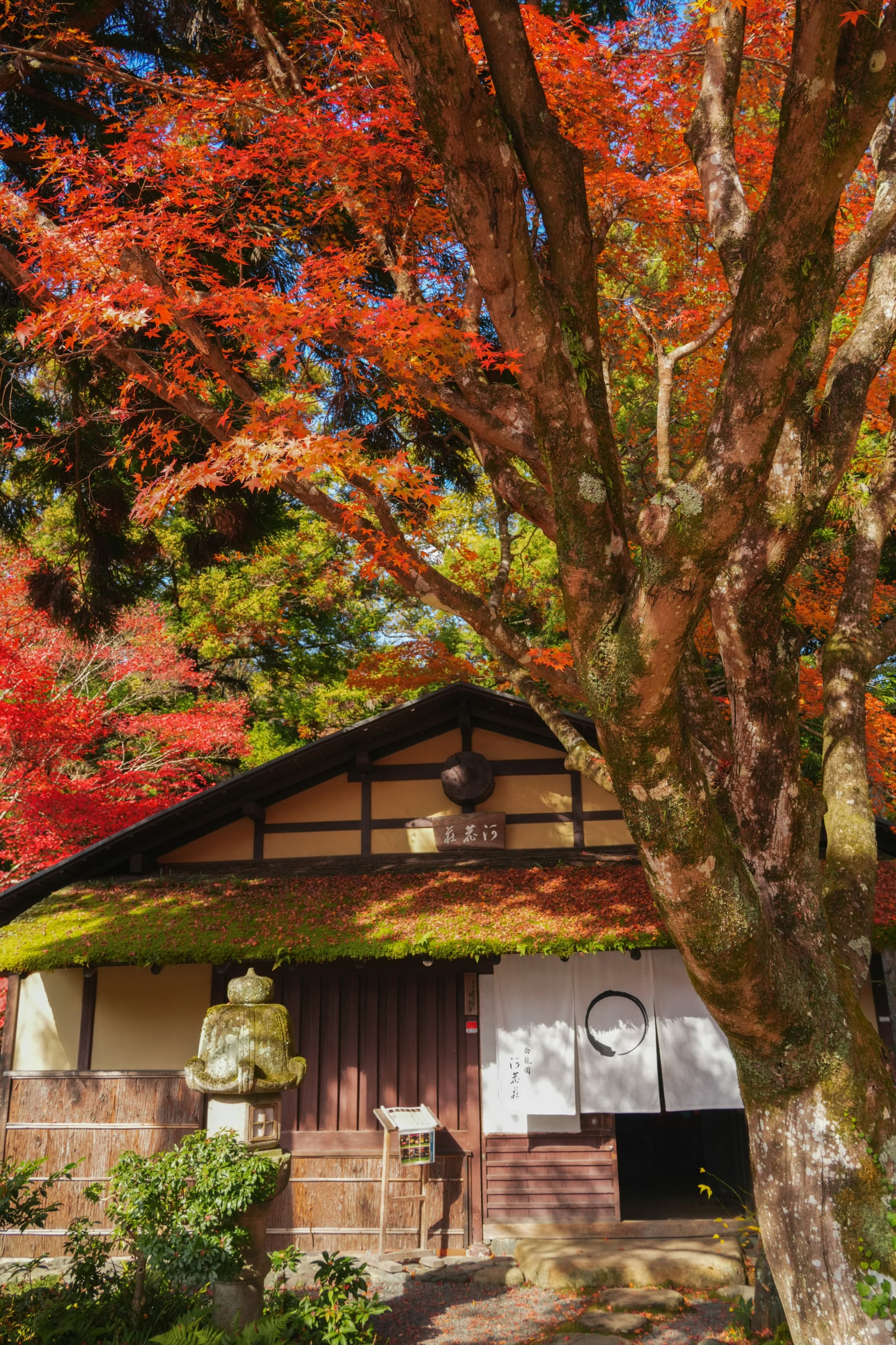
Framed by a moss roof and a temple curtain, the maple turns through its named reds: momiji-iro, the red of turning leaf; kaki-iro, persimmon; yamabuki-iro, the gold of late autumn. Each is a record in the Japanese Color Atlas, each links to its seasonal context.
RED LEAVES FRAME THE ARCHITECTURE — THE PALETTE IS A SEASON, NOT A SWATCH.
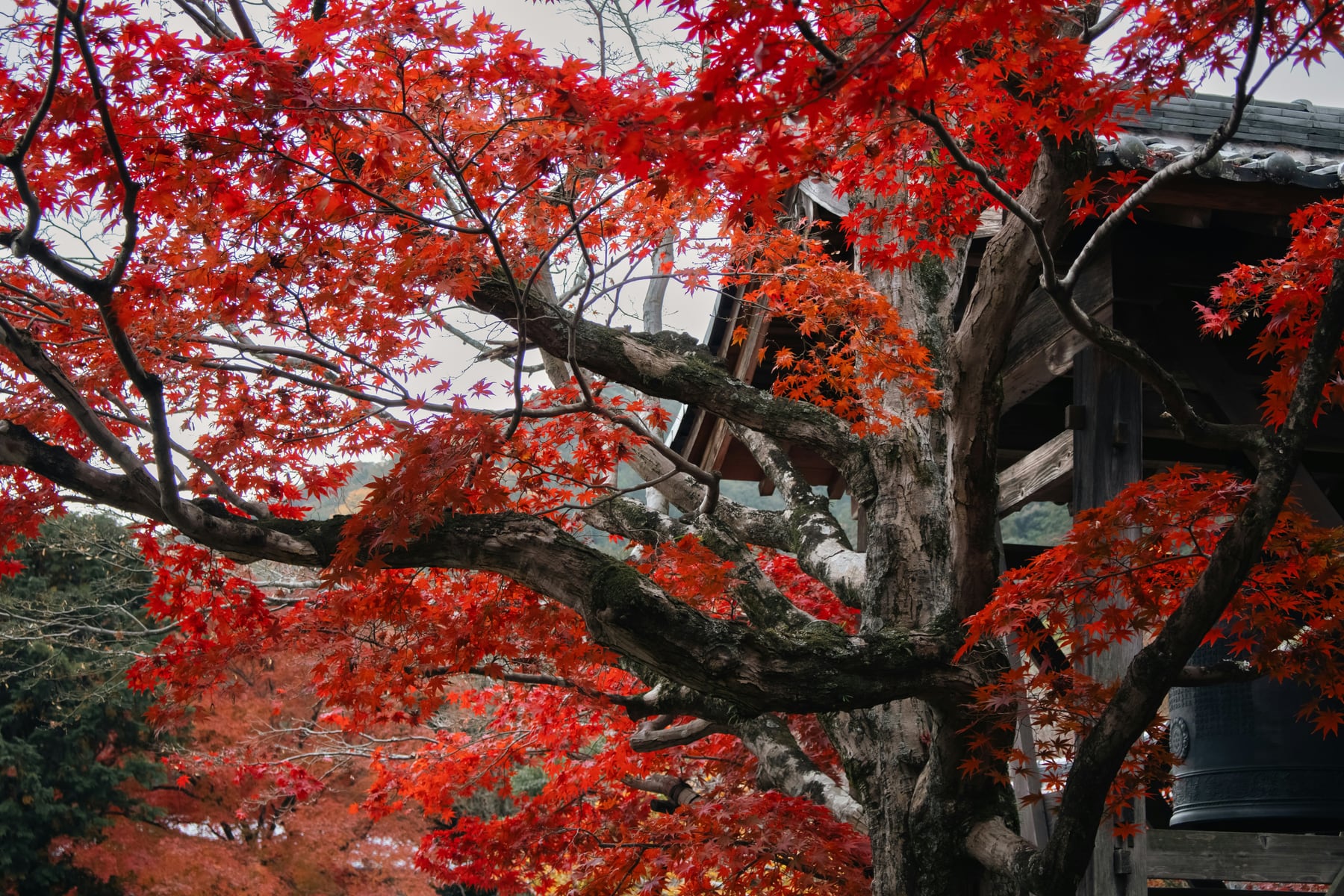
Against the dark wood of a bell tower, the maple reads as pure momiji-iro, held in contrast to the last matcha-iro green. A palette is a relationship in time: the atlas keeps the names so the season can be cited, not just remembered.